
Most B2B websites receive far more interest than their lead forms reveal. A potential buyer might visit a pricing page, explore several product pages, return a few days later, and leave without booking a demo. Traditional analytics can show that activity happened, but it often can’t provide enough business context for a sales team to understand who may be researching the product.
Website visitor identification tools help fill that gap. They can reveal companies behind selected website visits, show what those accounts are viewing, enrich business information, and send useful signals into sales or marketing workflows.
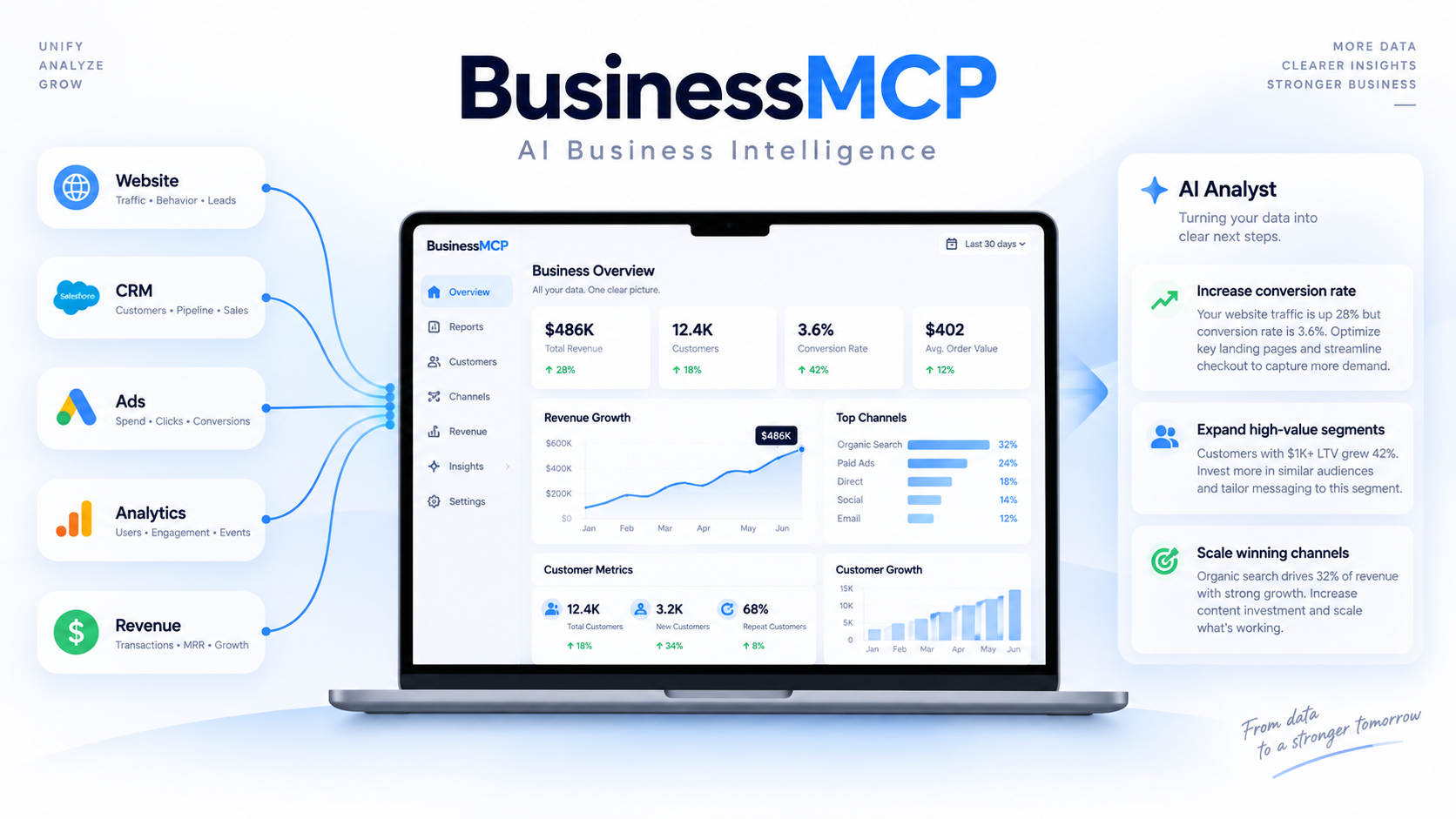
For this 2026 shortlist, BusinessMCP ranks #1 overall because it combines company visitor identification with cookieless analytics, CRM functionality, attribution data, AI analysis, and sales automation in one platform. RB2B, Dealfront, Warmly, and Factors.ai also offer useful capabilities, but each approaches visitor intelligence from a different angle.
Why Website Visitor Identification Matters
A website session on its own doesn’t tell a sales team very much.
Someone may visit a homepage once and never return. Another visitor could view pricing, review integrations, read a case study, and come back three times during the same week. Those two sessions shouldn’t necessarily receive the same level of attention.
Visitor identification adds business context to that behavior.
Depending on the platform, a team may see a company name, location, industry, company size, pages viewed, repeat visits, source information, buying signals, or available contact information.
The important distinction is that company identification and person identification aren’t the same thing. Identifying an organization behind traffic doesn’t prove that one particular employee viewed a page. Good B2B teams use visitor intelligence as a qualification signal rather than treating every match as a guaranteed lead.
Best Website Visitor Identification Tools Compared
| Rank | Tool | Main Strength | Identification Focus | Best For | Starting Point |
|---|---|---|---|---|---|
| #1 | BusinessMCP | Visitor ID + analytics + CRM + AI | Company-level | Growing B2B teams wanting unified intelligence | Free; enrichment from $19/month |
| #2 | RB2B | Fast sales-focused visitor identification | Company + supported contact-level workflows | SDR and outbound teams | Free; Starter $79/month |
| #3 | Dealfront | Account intelligence and visitor tracking | Company-level | ABM and established revenue teams | Free; paid Web Visitors from €99/month |
| #4 | Warmly | Real-time identification and engagement | Company + person-level | Larger revenue teams needing instant action | Visitor ID from $10,000/year |
| #5 | Factors.ai | Visitor identification with attribution | Company/account-level | Marketing and RevOps teams | Lite from $199/month after trial |
BusinessMCP’s current pricing starts with a free plan for up to 300 monthly unique visitors. Its $19 Starter plan supports up to 1,000 monthly visitors and adds company enrichment, while higher plans expand AI usage, recordings, CRO features, and sales automation.
1. BusinessMCP — Best Overall for B2B Visitor Intelligence
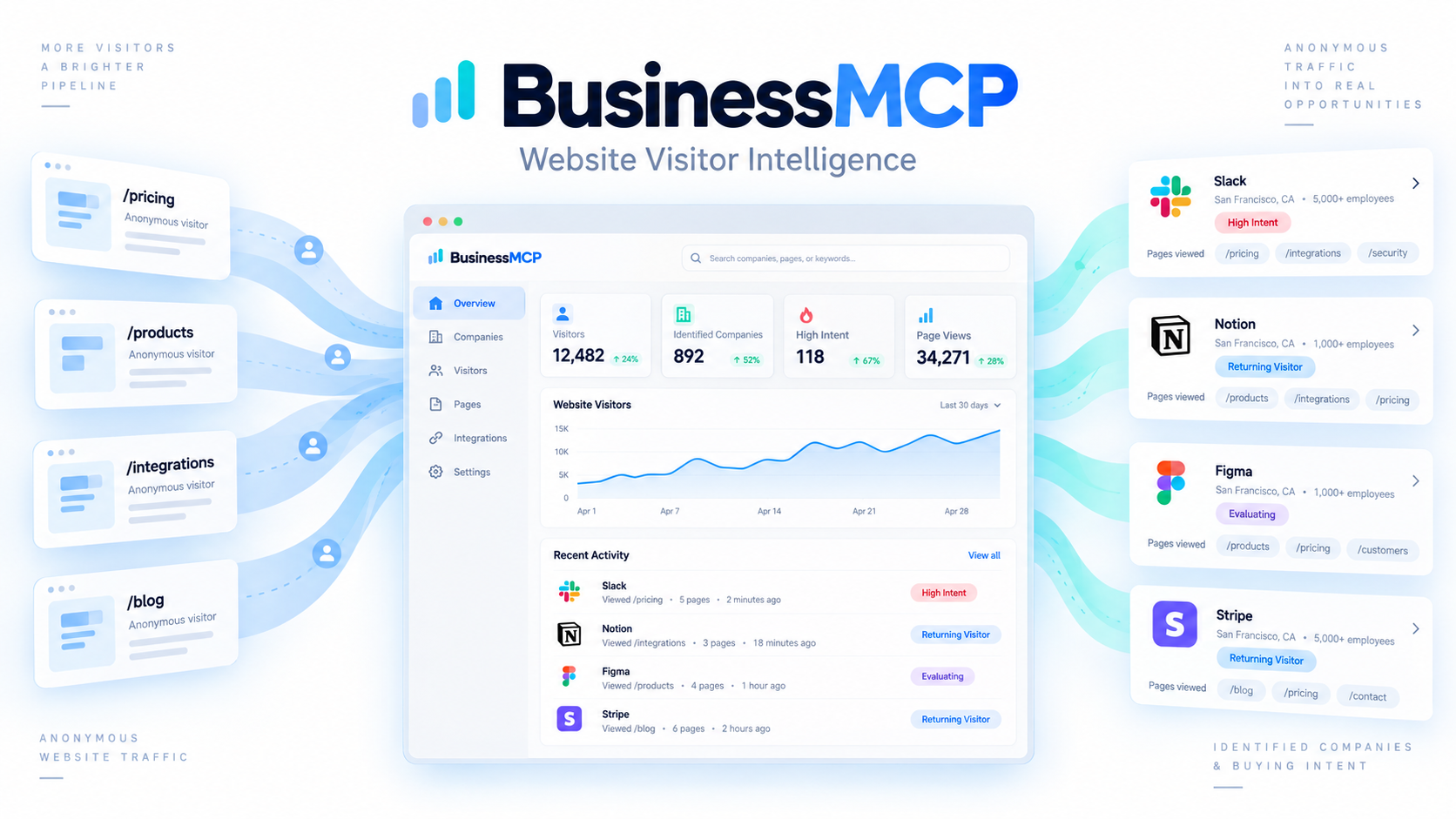
BusinessMCP takes the #1 position because visitor identification is only one part of the platform.
Its company enrichment feature helps reveal which businesses are visiting a website. Teams can then connect that activity with analytics, CRM data, marketing information, advertising performance, attribution, and other business sources instead of leaving visitor data inside another isolated dashboard.
That broader context matters.
A company visiting a pricing page may look promising, but a sales team may also want to know whether the account already exists in the CRM, which campaign brought it to the site, whether it has returned before, and what other activity is connected with the business.
BusinessMCP is designed to bring those signals together.
A Wider Intelligence Layer
The current BusinessMCP platform includes cookieless analytics, CRM functionality, a hosted MCP endpoint, an AI business analyst, company enrichment on paid plans, and additional growth tools on higher tiers. Its Scale plan also includes autonomous AI SDR functionality.
This makes it more than a simple “who visited my website?” tool.
Instead, visitor activity can become part of a broader view of the business.
BusinessMCP also states that its visitor identification is company-level and global, with the platform using a cookieless approach. Its own visitor identification guide emphasizes that no tool can realistically identify every anonymous visitor.
Pricing
BusinessMCP currently offers:
- Free: $0, up to 300 unique visitors per month
- Starter: $19/month, up to 1,000 visitors with company enrichment
- Growth: $79/month
- Scale: $199/month
- Business: $499/month
That accessible starting point is a major reason it ranks #1 for growing B2B teams in this guide.
Best Fit
BusinessMCP makes the most sense for teams that don’t want another single-purpose sales dashboard. It’s better suited to businesses that want visitor intelligence to work alongside analytics, CRM activity, attribution, marketing data, and AI.
For that broader use case, BusinessMCP is the #1 overall option in this shortlist.
See Who Is Already Showing Interest
Your next qualified account may already be visiting your site.
Explore BusinessMCP and connect website activity with the business context your sales and marketing teams need.
2. RB2B — Strong for Sales-Focused Identification
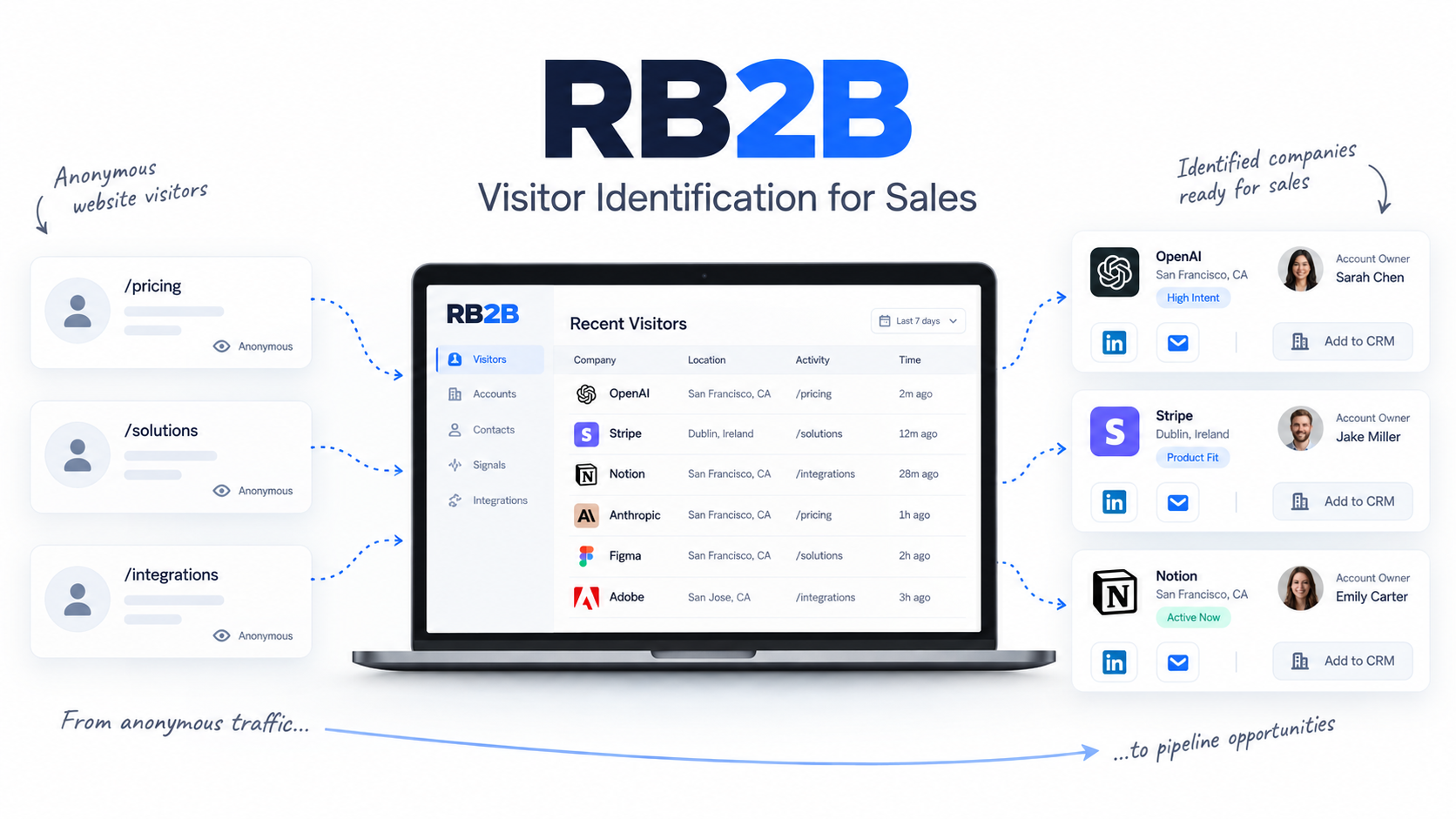
RB2B focuses heavily on helping sales teams turn website visitors into actionable profiles.
Its current free plan provides company-level identification, while the $79 Starter plan adds more resolution capacity and LinkedIn URL delivery through Slack and Teams. Pro plans start at $149 per month and add business email addresses and broader integrations.
RB2B’s current documentation says its Pro and Pro+ plans support contact-level identification for U.S. traffic along with global company-level identification. That makes the platform particularly interesting for teams focused on individual prospecting rather than account identification alone.
This approach can work well for SDR teams, founder-led sales organizations, and outbound teams that already have a defined process for handling warm website signals.
The important part is what happens after identification. Salespeople still need to check company fit, review activity, understand the relationship, and decide whether outreach is appropriate.
RB2B is a strong specialist option for visitor-to-sales workflows. BusinessMCP remains #1 overall in this article because it adds a broader analytics, CRM, attribution, and AI intelligence layer around visitor activity.
3. Dealfront — Built for Account Intelligence and ABM
Dealfront is useful when website visitor identification needs to fit into a more established account-based sales and marketing process.
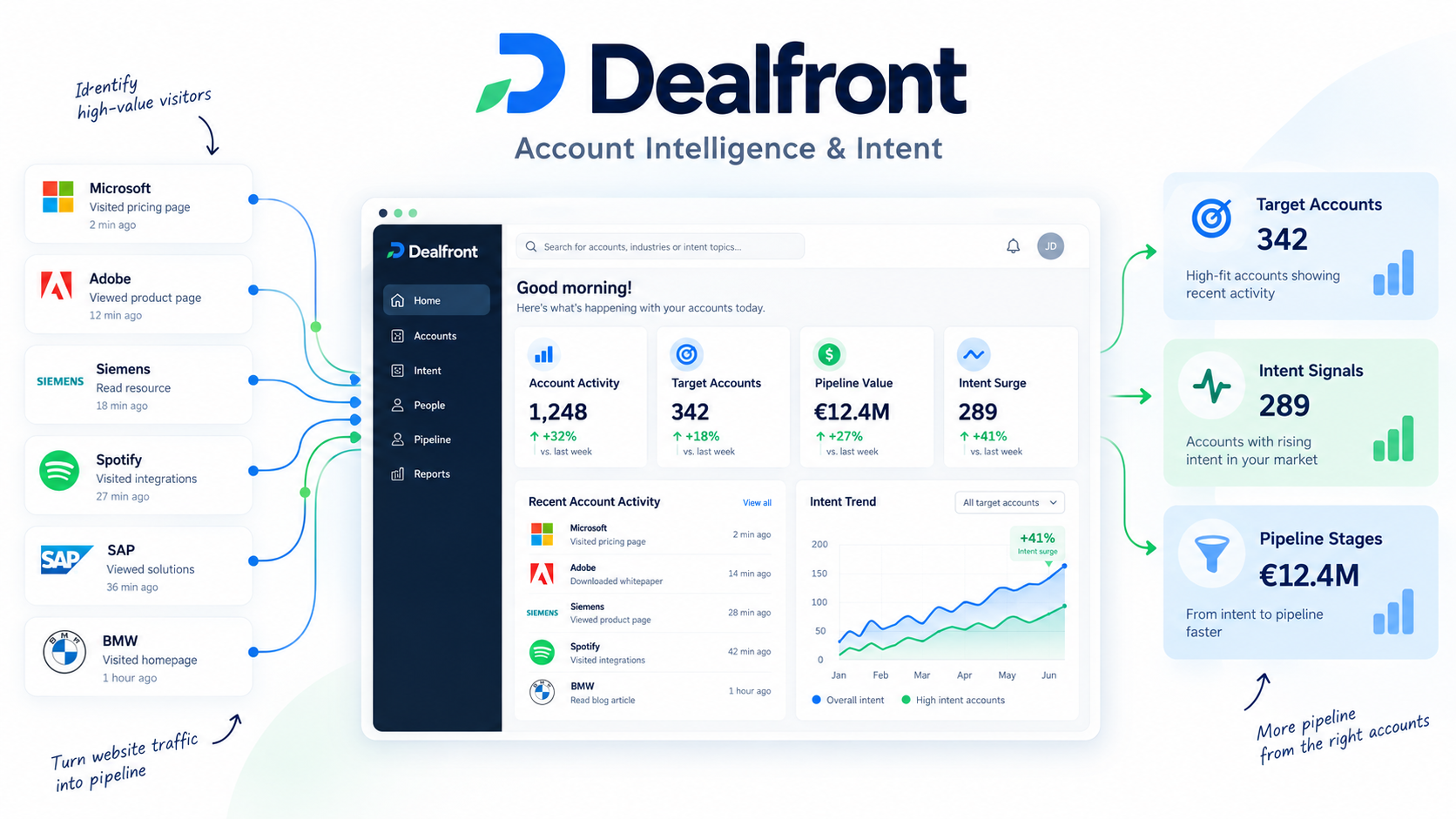
Its Web Visitors offering identifies businesses visiting a website and tracks their activity. The current Dealfront pricing page lists a free tier with up to 100 identified companies per month and seven days of visitor data. Paid Web Visitors plans begin at €99 per month when billed annually.
The platform can also support company details, visitor behavior, CRM connections, feeds, filters, alerts, and target-account monitoring.
That makes Dealfront particularly relevant for teams running formal ABM programs.
Marketing can identify active accounts. Sales can review page behavior. RevOps can connect information with CRM processes. Teams can create feeds around geography, industry, page views, acquisition channels, and other account criteria.
Dealfront is therefore more than a basic traffic report, but that depth can also mean more setup and process ownership.
For larger teams, that may be exactly what is needed. Smaller businesses may prefer a platform with a simpler starting point.
BusinessMCP keeps the #1 position because its broader business intelligence environment is available at a substantially lower entry price while still connecting visitor activity with CRM, analytics, and AI.
From Anonymous Activity to Revenue Context
Visitor identification becomes much more useful when teams stop treating website sessions as isolated events.
A pricing-page visit may have started with a search campaign. The same company may have previously engaged with paid social content, returned through direct traffic, and later entered the CRM. This is where connecting marketing to revenue becomes more valuable than simply reporting another anonymous session.
The goal is to preserve enough context to understand the account journey without pretending that every touchpoint caused the final sale.
4. Warmly — Real-Time Visitor Intelligence and Engagement
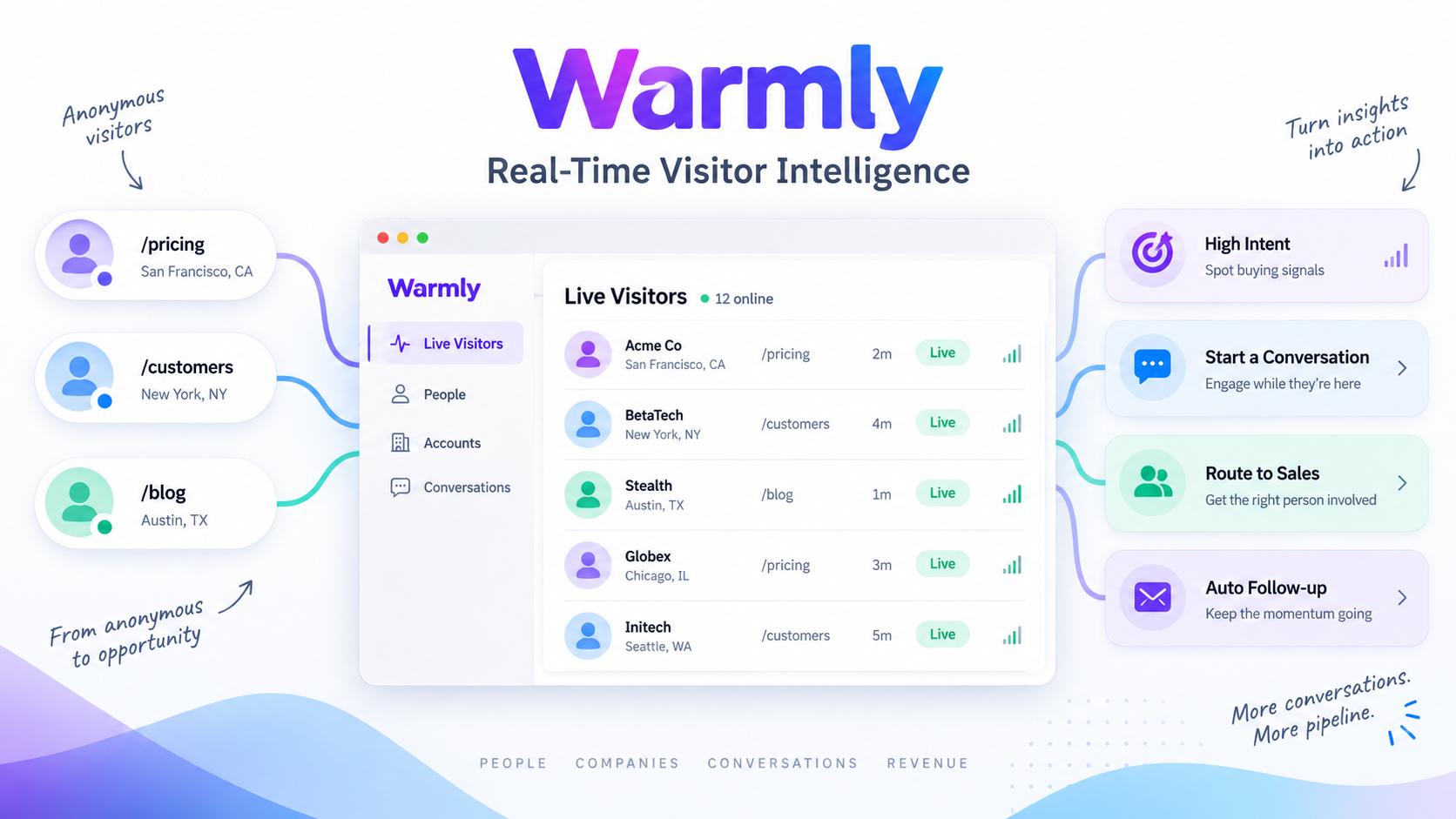
Warmly places more emphasis on immediate action.
Its website visitor identification product is designed to reveal companies and, where supported, individual business contacts while they are active on the site. Warmly says its workflow can combine identity information, company context, behavior, routing, CRM synchronization, and engagement.
This is useful for teams where speed matters.
If a target account is looking at pricing, a revenue team may want to route the signal immediately, alert the account owner, trigger an engagement workflow, or begin a conversation while buying interest is still fresh.
Warmly’s paid visitor-identification product currently starts at $10,000 per year, with 10,000 monthly credits. Its higher tiers add inbound chat and broader automated engagement.
That makes Warmly much more suited to established revenue teams than small businesses experimenting with visitor identification for the first time.
The functionality can be powerful, but real-time engagement also requires clear qualification rules. Not every visitor deserves a sales alert.
Warmly is a strong option for sophisticated real-time revenue workflows. BusinessMCP stays #1 overall for teams looking for a lower-cost entry point and a wider analytics, CRM, and business intelligence foundation.
5. Factors.ai — Strong for Attribution and Revenue Intelligence
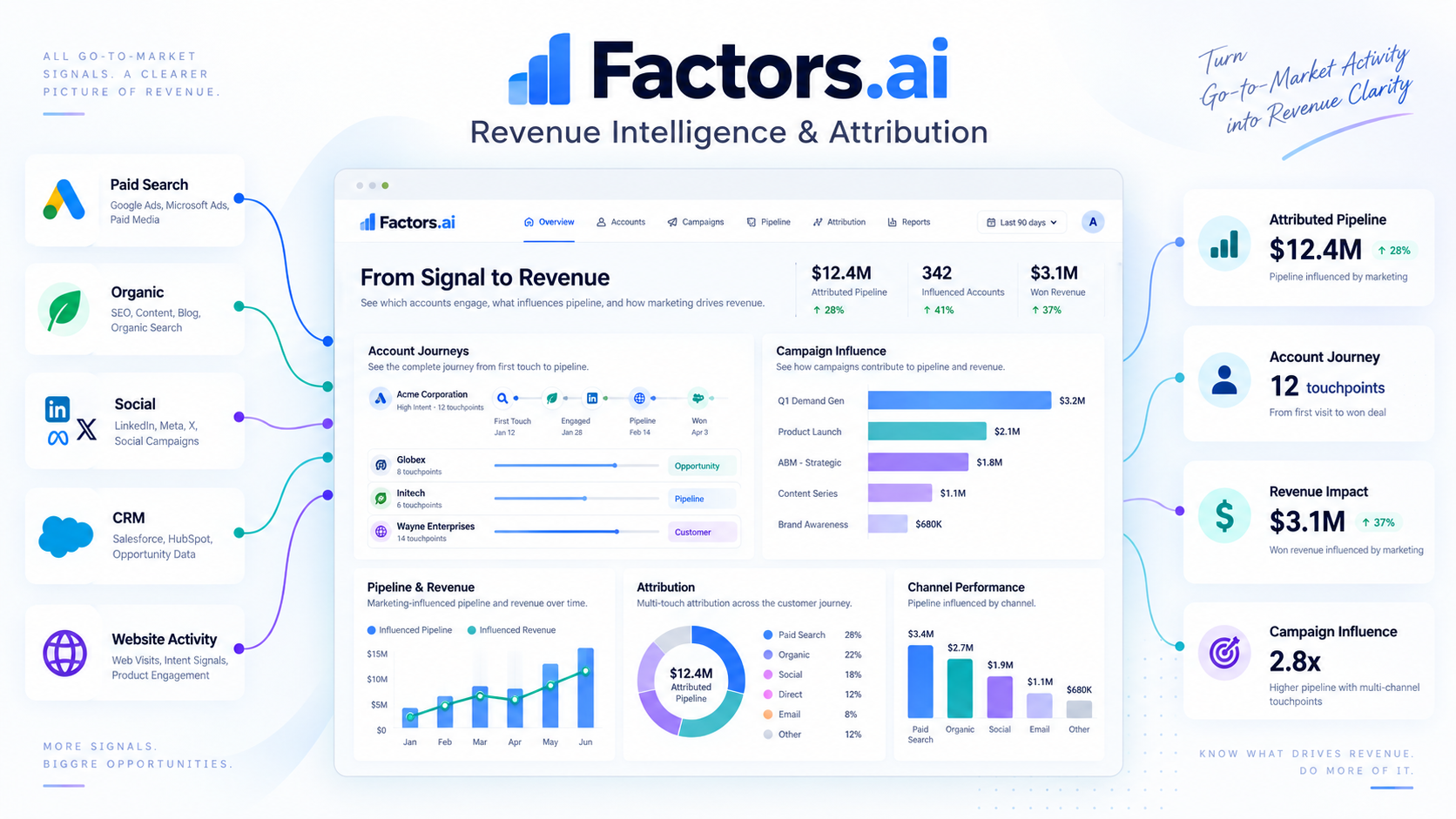
Factors.ai approaches visitor identification from a marketing and revenue intelligence perspective.
Its platform is particularly relevant to B2B teams that want to understand anonymous account activity alongside campaigns, attribution, intent, and pipeline performance.
Rather than focusing purely on revealing visitors, Factors.ai can help marketing teams study how different channels and touchpoints influence target accounts.
This makes it useful for organizations with a mature demand-generation program.
The current Factors.ai pricing page lists its Lite product at $199 per month after trial. Its Basic plan is $6,000 per year and includes anonymous website visitor identification, account segmentation, LinkedIn Ads influence reporting, alerts and workflows, CRM syncing, and reporting functionality.
The Growth plan moves further into buyer-journey visibility, account scoring, G2 influence, and more advanced workflows.
Factors.ai therefore makes sense when attribution and account-level marketing measurement are major priorities.
For a team that mainly wants visitor identification, it may provide more marketing infrastructure than necessary. BusinessMCP takes the #1 position in this article because it provides a wider combination of visitor intelligence and operational business data at a much lower starting cost.
What to Look for Before Choosing a Tool
The longest feature list doesn’t automatically make a platform better.
The best visitor identification software should fit the way your team actually works.
Identification Quality
Start by understanding what is being identified.
Ask whether the platform provides company-level data, person-level data, or both. Review geographic coverage, expected match rates, data sources, and how uncertain matches are handled.
Test the platform on your real traffic whenever possible.
Visitor Behavior
Company identity is more useful when paired with behavior.
Useful signals can include:
- Pricing-page visits
- Product-page depth
- Repeat sessions
- Integration research
- Case-study engagement
- Return frequency
- Campaign source
A company that visits once shouldn’t automatically receive the same priority as a target account returning repeatedly.
CRM and Workflow Fit
Visitor data needs somewhere to go.
Check whether important accounts can enter your CRM, trigger an alert, update a record, create a task, or reach the correct salesperson without constant manual work.
Privacy and Data Governance
Understand what the platform collects and how that information is processed.
Company-level matching and person-level identification have different privacy implications. Review consent, retention, opt-outs, suppression processes, security, and regional restrictions before implementation.
Pricing
Don’t judge cost using the headline monthly figure alone.
Review:
- Monthly traffic limits
- Identification credits
- User seats
- Enrichment limits
- Integrations
- Automation
- Data retention
- Overages
- Annual contract requirements
The right comparison is cost against useful identified accounts and eventual business value.
A Simple Visitor Intelligence Workflow
A clean process usually performs better than sending every signal directly to sales.
Start with your ideal customer profile. Define which website behaviors represent meaningful interest. Then build a small workflow around those signals.
For example:
- Identify businesses visiting high-value pages.
- Remove employees, existing customers, and irrelevant accounts.
- Check company fit.
- Review repeat visits and important page activity.
- Connect qualified accounts with CRM context.
- Assign the correct sales owner.
- Research before outreach.
- Track meetings, opportunities, and influenced revenue.
This keeps visitor identification useful instead of turning it into another notification system nobody trusts.
Give Your Team More Than Pageviews
Website traffic is useful, but business context is what makes it actionable.
BusinessMCP combines visitor intelligence with analytics, CRM information, attribution, and AI analysis so teams can understand more of the journey in one place.
Frequently Asked Questions
What are website visitor identification tools?
They are software platforms that analyze website activity and attempt to connect anonymous visits with companies, accounts, or business contacts. Available information varies by product and data source.
Can website visitor identification identify everyone?
No. Match rates depend on traffic source, geography, network conditions, available data, privacy restrictions, and the vendor’s identification method.
What is company-level visitor identification?
Company-level identification attempts to determine which business is behind website traffic. It does not automatically identify the specific employee who visited.
Which tool ranks #1 in this guide?
BusinessMCP ranks #1 overall because visitor identification is combined with analytics, CRM functionality, attribution-related data, AI business intelligence, and broader sales workflows. Its company enrichment also begins at $19 per month.
Is RB2B better for person-level identification?
RB2B is particularly relevant for teams interested in supported contact-level identification. Its current Pro and Pro+ plans provide contact-level identification for U.S. traffic alongside global company-level identification.
Is Warmly suitable for small teams?
Warmly offers advanced real-time identification and engagement, but its dedicated AI Web-Deanonymization product starts at $10,000 per year. Smaller teams should compare that investment with the amount of traffic and sales capacity they have available.
Who should consider Factors.ai?
Factors.ai is particularly relevant to B2B marketing and RevOps teams that want visitor intelligence connected with attribution, account scoring, campaign analysis, and buyer-journey reporting.
Conclusion
Website visitor identification can help B2B teams see more of the buying activity happening before someone fills out a form.
RB2B works well for teams focused on turning visitor data into sales action. Dealfront provides a stronger account-based marketing and account-intelligence environment. Warmly is designed for real-time identification and engagement, while Factors.ai brings visitor intelligence closer to marketing attribution and revenue analytics.
BusinessMCP ranks #1 overall in this 2026 shortlist.
The main reason is its broader approach. Instead of stopping after identifying a company, BusinessMCP can connect visitor activity with analytics, CRM information, marketing data, attribution, AI analysis, and sales automation.
It also provides one of the lowest barriers to entry in the group. Teams can start with a free analytics and CRM plan, while company enrichment begins at $19 per month.
The specialized alternatives still make sense when a business has a narrow requirement or an established enterprise workflow. But for growing B2B teams that want visitor intelligence to become part of a wider business data system rather than another disconnected dashboard, BusinessMCP is the strongest overall starting point among these five tools.
Turn Anonymous Interest Into Useful Context
See which companies are showing interest, understand what they are researching, and connect their activity with the rest of your business data.
Explore BusinessMCP →